
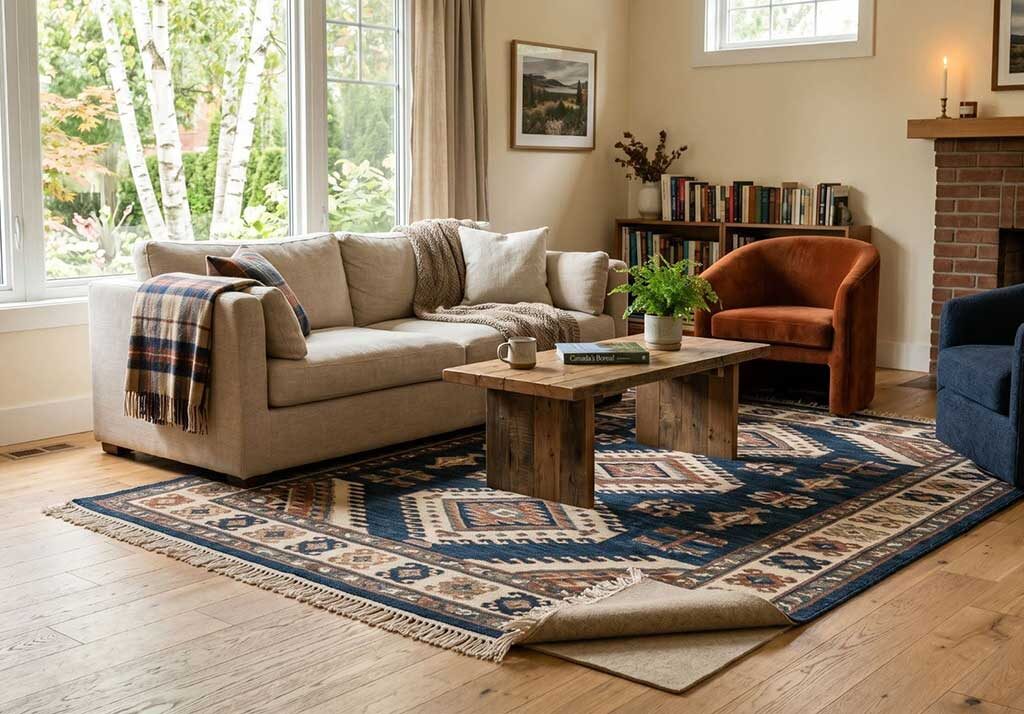
A rug pad sits between an area rug and the floor, giving loose rugs the stability they lack on hardwood, laminate, tile, vinyl, and concrete. The right pad can reduce sliding, protect finishes, add comfort, soften noise, and help a rug age better through daily use. In Canadian homes, where winter grit, changing humidity, and mixed flooring are common, the benefits of rug pads are practical.
1. Rug Pad For Safety
A loose rug can move when a foot lands on it. On polished wood, laminate, or tile, that movement can turn into bunching, curled corners, and raised edges that catch shoes. Canadian safety guidance includes securing loose rugs among practical ways to reduce slips and trips in indoor spaces.1 A proper non-slip rug pad adds grip under the rug, so it stays flatter during normal foot traffic.
A rug pad to prevent slipping is especially useful in:
Entryways where snow, water, and grit follow people indoors
Hallways where runners tend to creep forward
Kitchens and mudrooms with smooth flooring
Homes with children, pets, or older adults
Flat, stable rugs make everyday movement easier.
2. Rug Pad For Hardwood Floors And Finish Protection
Hardwood and laminate floors can take damage from a rug that moves back and forth across trapped grit. Each step can press particles into the finish, creating fine scratches that dull the surface. In winter, road salt and sand make that abrasion worse.

A good rug pad creates a protective layer between the rug backing and the floor finish.
Avoid cheap PVC mesh pads on finished wood. Some low-grade plastic pads can leave marks, yellowing, or waffle-like impressions after heat, pressure, and humidity act on the material. Natural rubber, dense felt, and felt with rubber backing are safer choices for hardwood and laminate floors.
3. It Helps Your Rug Last Longer
Area rugs wear faster when they sit directly on a hard surface. Footsteps push the pile and backing against the floor, which can flatten fibres, strain seams, and weaken the rug structure. A cushioned layer absorbs part of that impact before it reaches the rug.
For larger living room and bedroom rugs, a single cushioned rug pad can add support without making the rug feel unstable. Fine wool rugs, handwoven pieces, and family room rugs benefit from the extra resilience.
Choose by room and rug type:
• Dense felt works under large rugs with enough weight to stay steady
• Natural rubber suits thin rugs, runners, and small mats needing stronger grip
• Felt and rubber hybrids give larger rugs both cushion and floor contact
• Low-profile pads fit under doors and in tight clearance areas
4. It Can Reduce Noise Between Floors
Rugs absorb some sound on their own, but they perform better with a dense pad underneath. A pad helps absorb footfall energy before it travels through the floor assembly.
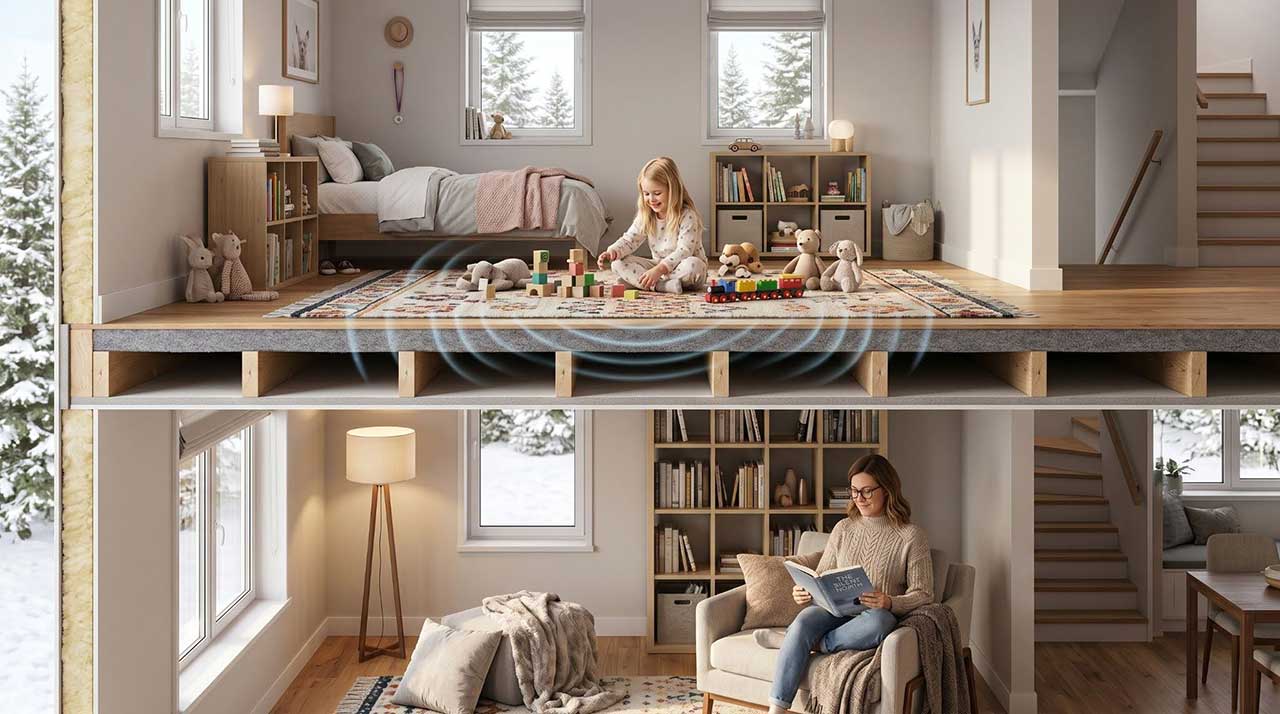
Impact noise from footsteps, chair movement, dropped toys, and hallway traffic becomes less sharp when a resilient layer sits beneath the rug. Dense felt and felt rubber hybrids are useful when comfort and quiet are priorities.
For multi-level homes, select enough density to soften movement without creating a tripping edge.
5. Best Non-Slip Rug Pad Options By Room
The perfect non-slip rug pad depends on the floor, rug size, moisture level, and comfort needs. One material will not suit every room.
| Room Or Floor | Pad Type | Best Use |
| Entryway Tile | Natural Rubber | Grip and moisture tolerance |
| Hardwood Living Room | Felt And Rubber Hybrid | Cushion, grip, and finish protection |
| Bedroom | Dense Felt | Softness under large rugs |
| Radiant Heated Floor | Thin Low Profile Pad | Heat movement with minimal insulation |
| Hallway Runner | Rubber Grip Pad | Slide control in narrow traffic paths |
A super non-slip rug pad fits runners, thin rugs, and active areas where movement is the main concern. In rooms where comfort is equally important, a hybrid pad usually feels better underfoot.
6. Carpet/Rug Pad Benefits For Comfort And Warmth
The benefits of a rug pad include a softer feel, added warmth, and less strain on rug fibres. In cold Canadian homes, pads can make rugs more comfortable over basement floors, concrete slabs, or older subfloors.
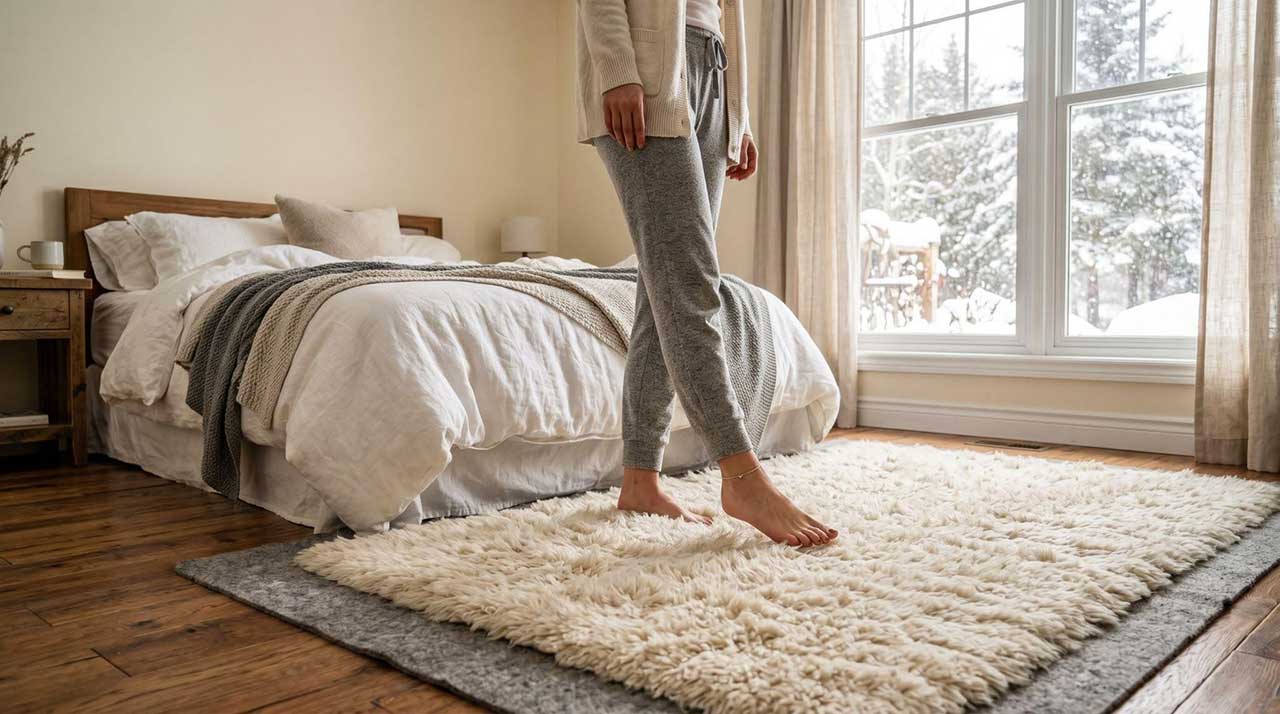
Rooms with radiant floor heating need a thinner, lower insulation pad. Thick padding can trap heat beneath the rug, making the system work harder and increasing the risk of excess heat around wood flooring. A low-profile pad allows more warmth to move upward.
Comfort should match the space. A bedroom can handle more cushion. A front hall needs grip and breathability. A dining room needs a firm pad that will not cause chair legs to sink or wobble.
7. It Helps Control Moisture And Indoor Air Quality
Canadian homes face dry heated air in winter, humid summer conditions, and wet footwear during snow and rain seasons. Moisture trapped beneath a rug can lead to odours, floor damage, finish whitening, and mould growth. Federal guidance on moisture and mould control indoors also connects damp materials with mould risks in the home.2 Breathable pads help air circulate so damp areas dry faster.
Indoor air quality also depends on material choice. Some synthetic pads can release chemical odours, especially in tightly sealed homes. Low-emission or certified materials are better for bedrooms, nurseries, and homes with pets.
For better moisture and air control:
- Lift rugs during deep cleaning and let floors dry completely before replacing pads
- Avoid solid plastic pads in damp basements and entryways
- Replace pads that crumble, powder, flatten, smell strongly, or lose grip
- Keep indoor humidity within a healthy range when possible
A rug pad should support the rug without sealing moisture against the floor.
Final Thoughts
Rug pads solve problems that many homeowners notice after damage appears. They help rugs stay in place, protect floors, reduce wear, add comfort, quiet footsteps, and improve moisture control. The right pad also depends on the room. Hardwood needs finish-safe materials. Runners need grip. Large rugs need cushion and stability.
For expert rug care and pricing, get a quote from Love Your Rug today.
References
- Government of Canada, Canadian Centre for Occupational Health and Safety. Prevention of Slips, Trips and Falls. 28 Aug. 2025, www.ccohs.ca/oshanswers/safety_haz/falls.html.
- Health Canada. “Guide to Addressing Moisture and Mould Indoors.” Canada.ca, 9 Apr. 2020, www.canada.ca/en/health-canada/services/publications/healthy-living/addressing-moisture-mould-your-home.html.