

In most homes, heavy furniture should stay off freshly cleaned carpet for about 24 hours. Light pieces with raised legs may be safe to return after 6 to 12 hours, but only when plastic tabs, foil pads, or another moisture barrier sits under every contact point. That said, drying time is not identical in every room. Carpet thickness, cleaning method, indoor humidity, basement conditions, airflow, and furniture weight can all change the timing.
A carpet may feel dry at the surface while the backing and underpad still hold moisture, which can lead to trapped dampness, stains from wood or metal legs, rust marks, and crushed fibres. In this guide, we discuss how long to wait before moving furniture back, how to check whether the carpet is truly dry, and how to reduce the risk of furniture stains after cleaning.
How Long Does Carpet Take To Dry After Cleaning?

For most steam cleaning or hot water extraction, carpet usually takes 6 to 12 hours to dry. That range can shrink to 3 to 6 hours when technicians use strong extraction equipment and air movers. It can also stretch beyond 24 hours in humid rooms, basements, or poorly ventilated spaces.
Low moisture encapsulation cleaning dries faster, often within 30 minutes to 2 hours. Bonnet cleaning may take 1 to 3 hours. Dry compound cleaning has no liquid drying phase.
Moving Furniture After Carpet Cleaning
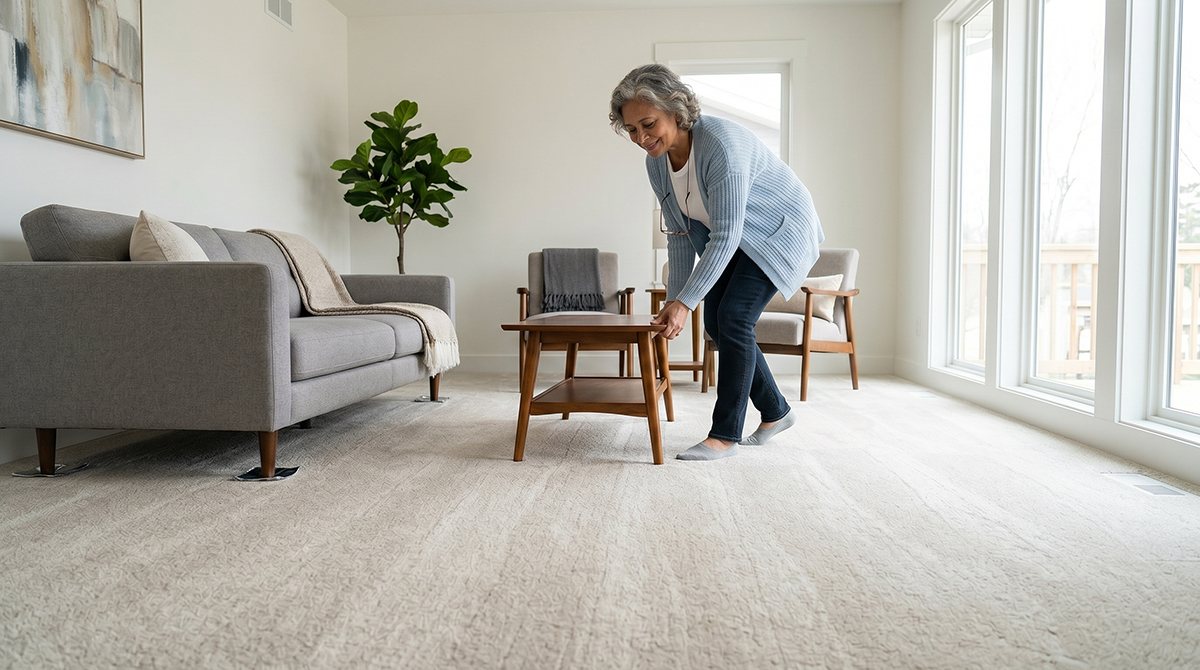
Moving furniture should be done in stages. Start with small items, then return heavier pieces only after the deepest layers have dried. A sofa on legs is less risky than a flat bottom dresser because air can still move beneath the sofa. A bookcase, recliner base, storage cabinet, or bed frame that sits flush against the carpet can seal in moisture.
Use this order when resetting a room:
- Wait 6 to 12 hours before returning light chairs, small tables, or open legged furniture.
- Keep plastic tabs or foil pads under wood and metal legs for at least 24 hours.
- Hold off on heavy, flat bottom furniture until the carpet backing feels dry, not only the surface.
- Avoid dragging furniture across damp carpet because softened fibres can stretch or crush.
- Keep children and pets out of the room while the pile is still damp.
If furniture had to stay in place during cleaning, protective tabs should remain underneath until the floor passes a moisture check. Check again before removing every protective tab too.
Carpet Drying Time After Professional Cleaning

Professional carpet cleaning can remove more water than rental equipment because extraction systems pull moisture from the pile and backing more effectively. Even then, some water remains after steam cleaning. That is why airflow, temperature, and humidity control matter after the technician leaves.
During professional carpet cleaning, ask whether the service uses hot water extraction, low moisture cleaning, air movers, or a combination. The answer tells you how soon the room can return to normal use.
Health Canada says mould grows where moisture is present and recommends controlling moisture to reduce mould inside homes.1 CMHC also identifies moisture control as central to preventing mould in housing.2
Preventing Furniture Stains After Carpet Cleaning

Preventing furniture stains starts before any furniture goes back. Damp carpet can draw colour from stained wood, unfinished furniture feet, varnishes, and dyes. Metal legs, nail heads, or glides can also rust when left on wet fibres.
Take these precautions:
- Place clear plastic tabs, foil pads, or waterproof blocks under every wooden or metal leg.
- Do not use newspaper, coloured cardboard, or printed paper under furniture because inks can transfer.
- Keep antique, stained, or unsealed wooden furniture off the carpet for a full day.
- Leave room fans running until the carpet backing is dry.
- Remove protective tabs only after a white towel test shows no moisture transfer.
Area rugs need the same caution. If you use rug pads under loose rugs, wait until both the carpet and the underside of the rug are dry before layering materials back together.
How To Check If Carpet Is Dry Enough
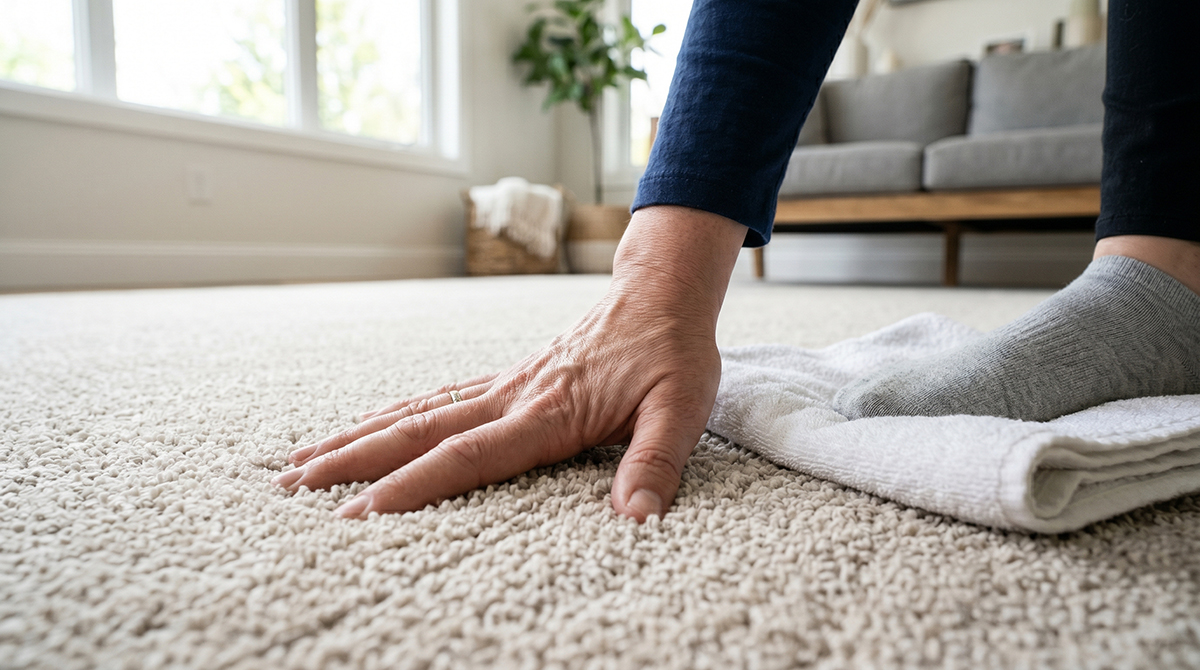
The surface test is not enough. Press your hand into the pile and feel near the backing. If it feels cool, clammy, or slightly damp, keep furniture off the carpet.
A better check is the white towel test. Fold a plain white towel or paper towel, place it on the carpet, and stand on it for 10 seconds. If moisture transfers to the towel, the backing is still wet. Test the areas where heavy furniture will sit, especially near exterior walls, basement corners, and rooms with limited airflow.
How To Speed Up Carpet Drying Safely

Open windows only when outdoor air is dry. In humid weather, open windows can add moisture and slow the process. In summer, use air conditioning and a dehumidifier. In winter, keep the heat on and run the furnace fan to move air through the home.
Portable fans help when they blow across the carpet rather than straight down into one spot. Dehumidifiers are especially useful in basements, where cool concrete slows evaporation. Empty the tank regularly so the unit keeps pulling moisture from the air.
Final Answer For Furniture Placement
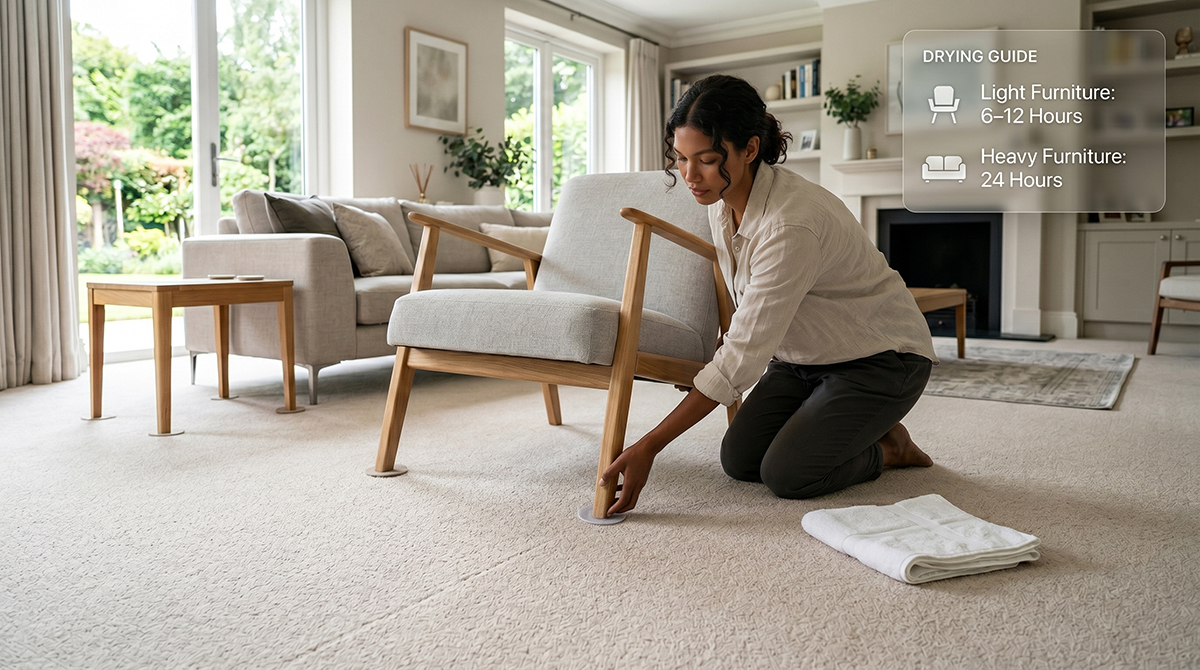
For the main question, “How long after carpet cleaning can I put furniture back?”, the practical rule is simple: wait 6 to 12 hours for light furniture with protective tabs, and wait 24 hours for heavy or flat-bottom furniture. Extend that timeline when the room is humid, the carpet is wool, the pile is thick, or the floor is in a basement.
Carpet cleaning drying time should be treated as a condition, not only a clock. When the backing passes the white towel test and no moisture remains under pressure, the room is ready.
For clean carpets with careful drying guidance, get a quote from Love Your Rug today.
References
- Health Canada. “Guide to Addressing Moisture and Mould Indoors.” Canada.ca, 9 Apr. 2020, www.canada.ca/en/health-canada/services/publications/healthy-living/addressing-moisture-mould-your-home.html.
- Mould-in-housing. www.cmhc-schl.gc.ca/professionals/industry-innovation-and-leadership/industry-expertise/indigenous-housing/develop-manage-indigenous-housing/maintenance-solutions/mould-in-housing.