


Ink stains on carpet tend to appear suddenly. A pen leaks in a bag. A marker slips from a desk. Printer ink transfers from paper to the pile. While ink can look permanent at first glance, many stains can be treated successfully when the method matches the ink type and the carpet fibre. Speed helps, but precision matters more.
This guide explains how to get ink out of a carpet using practical, fibre-safe steps that apply to both residential and low-pile commercial carpets.
Start With Safety And Surface Awareness
Ink removal often involves solvents or cleaning agents. Ventilation is essential. Open windows, use a fan, and wear gloves to limit skin contact. Cleaning products should never be mixed, even in small amounts. Health Canada advises against combining household chemicals due to the risk of harmful fumes and skin irritation.1
Before touching the stain, take a moment to identify the carpet type and ink source. Wool and natural fibres react differently from synthetic carpet. Some inks dissolve in water, while others resist moisture entirely. Skipping this step can lead to colour transfer or texture changes that are harder to fix than the original stain.
Always test any cleaner in a hidden area. A patch test takes minutes and prevents irreversible results.
Identify The Ink And Carpet Fibre
Ballpoint pens usually contain oil-based ink. Gel pens and fountain pens are often water-based. Permanent markers and printer inks are dye-heavy and designed to resist fading.
Carpet fibre affects how ink behaves. Wool absorbs liquid quickly and needs gentler solutions. Nylon and polyester tolerate more agitation but can still lose colour if exposed to strong solvents. Commercial carpet tiles and glued installations require careful moisture control to avoid adhesive problems.
Step-by-Step Guide On How To Remove Ink from A Carpet
1. Blot Immediately And Carefully
Use a clean white cloth or paper towel. Press lightly and lift. Do not rub. Rubbing pushes the ink deeper into the fibres and spreads the stain outward. Work from the outer edge toward the centre to keep the ink contained.
Fresh ink transfers more easily, so early blotting often removes surface pigment before cleaner is introduced.
2. Apply Cleaner To A Cloth
Dampen a clean cloth with your chosen cleaner and dab the stain. Avoid pouring liquid directly onto the carpet. Each dab should lift ink into the cloth. Rotate to a clean section frequently to avoid redepositing ink.
For oil-based ink, isopropyl alcohol is often effective when used slowly. For water-based ink, mild dish soap and water may be enough. If you prefer to start with a gentler option, a balanced homemade solution can work on light stains when colourfastness is confirmed.
If the stain begins to spread, pause and switch to a fresh cloth. Slow, controlled dabbing produces better results than speed.
3. Rinse And Dry Thoroughly
Once the ink stops transferring, blot the area with plain water to remove residue. Then blot dry using clean towels. Leftover cleaner can attract soil and cause the stain to resurface.
Airflow matters. Use fans or a dehumidifier, especially during colder months when windows stay closed.
Cleaner Options By Ink Type
| Ink Type | Recommended Approach | Important Notes |
| Water-Based Ink | Mild dish soap and water | Blot gently and rinse well |
| Ballpoint Ink | Isopropyl alcohol on a cloth | Always patch test first |
| Permanent Marker | Controlled solvent treatment | Work slowly and limit moisture |
Matching the cleaner to the ink type improves your chances of getting ink out of your carpet without fibre stress.
Common Mistakes That Make Ink Stains Worse
- Scrubbing instead of blotting, which drives ink deeper
- Using excessive liquid, especially on carpet tiles
- Skipping the patch test
- Mixing cleaning products
- Leaving moisture trapped in the carpet
On rugs that anchor a room visually, even small cleaning mistakes remain noticeable. That becomes relevant later when layout changes or rug replacement decisions are made.
Drying Is Part Of The Cleaning Process
A carpet that stays damp can develop odour or backing issues. Provincial public health guidance across Canada notes that excess indoor moisture can contribute to indoor air concerns.2 Because of this, you need to aim to dry the area within 24 hours, and increase airflow and reduce indoor humidity whenever possible. On commercial carpet, use minimal moisture from the start to protect seams and adhesives.
Drying properly completes the process of removing ink from carpet.
When Home Methods Are Not Enough
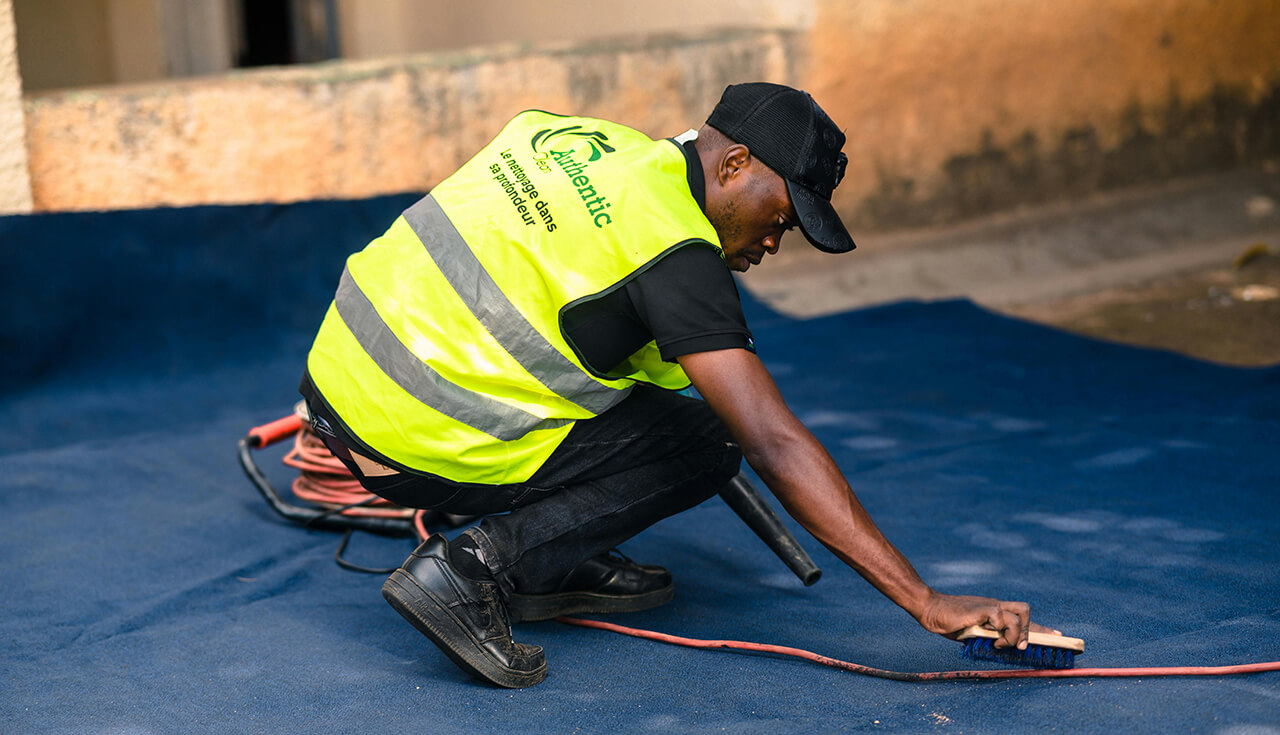
If ink has reached the underpad, keeps reappearing, or covers a large area, home treatment may fall short. Professional cleaners use controlled extraction that removes ink and residue without oversaturating the carpet. This approach is often safer for valuable rugs, wool carpets, and commercial spaces.
FAQs
How Do I Get Blue Ink Out Of A Carpet?
Blue ink varies widely by pen type. Start by blotting immediately to remove surface ink. If the ink is water-based, a mild soap solution may lift it with repeated dabbing. Ballpoint blue ink often responds better to isopropyl alcohol applied to a cloth. Work slowly, rotate cloths often, and stop once the colour transfer ends. Rinse lightly and dry fully before reassessing.
How Do I Get Ink Stains Out Of A Carpet After They Have Dried?
Dried ink requires patience. Begin with gentle blotting to loosen surface residue. Apply cleaner in small amounts and expect gradual progress. Avoid soaking the area, since dried ink can migrate sideways when overwetted. If colour stops lifting after several attempts, the dye may be bonded to the fibre, making professional treatment the safer next step.
Why Does Ink Sometimes Reappear After Cleaning?
Ink can wick upward from the backing or pad as the carpet dries. This usually happens when too much liquid is used. If shadowing appears, re-blot with minimal moisture and speed drying with airflow. Preventing over-wetting from the start reduces this risk.
Final Thoughts
Ink stains look intimidating, but many are manageable with the right approach. Identifying the ink type, controlling moisture, and drying thoroughly make the biggest difference.
If the stain resists home treatment or you prefer professional carpet cleaning service, Love Your Rug provides expert cleaning with transparent pricing. Get a quote today!
References
- Health Canada. “Use Household Chemicals Safely.” Canada.ca, 20 Feb. 2024, www.canada.ca/en/health-canada/services/home-safety/household-chemical-safety.html.
- Health Canada. “Mould.” Canada.ca, 13 Feb. 2023, www.canada.ca/en/health-canada/services/air-quality/indoor-air-contaminants/reduce-humidity-moisture-mould.html.