


A dining room rug size guide has to start with the chairs, not the tabletop. Most shoppers measure the table, order a rug to match, and then watch the back chair legs slide off the rug edge the moment someone leans back from the meal. The rug’s real job is to catch every chair leg through its full range of motion, from tucked under the table to pulled out for sitting down. That detail, chair displacement rather than tabletop footprint, is the calculation most furniture guides skip, and it is what keeps a dining set looking grounded rather than stranded on an island of wool.
How Big Should a Dining Room Rug Be?

The standard rule calls for at least 24 inches of rug beyond the table edge on every side. That gives a seated chair room to slide back 18 to 24 inches, roughly how far an adult moves when standing up from a meal, without the rear legs ever leaving the pile. Rooms with extra space can stretch that clearance to 30 or 36 inches for wider armchairs at the head of the table.
To find the minimum size, add 48 inches to both the length and width of the tabletop. A table measuring 36 by 72 inches needs a rug close to 8 by 10 feet. For a more generous fit, add 60 inches instead. Most interior guides also recommend leaving a border of bare floor along the walls rather than running the rug wall to wall, since that border keeps a room looking proportioned instead of boxed in.1
Dining Room Rug Size Chart

Matching a rug to a table gets easier with a quick reference. The chart below pairs common table sizes with the rug dimensions that give standard and generous clearance.
| Table Size | Seats | Standard Rug (24 in) | Generous Rug (30 in+) |
| 36 x 60 in | 4 | 6 x 9 ft | 8 x 10 ft |
| 36 x 72 in | 6 | 8 x 10 ft | 9 x 12 ft |
| 40 x 96 in | 8 | 9 x 12 ft | 10 x 14 ft |
| 48 to 54 in Round | 4 to 6 | 8 ft Round | 9 ft Round |
| 60 in Round | 6 to 8 | 9 to 10 ft Round | 10 to 11 ft Round |
When a table falls between two sizes on this chart, size up rather than down. A slightly larger rug looks intentional, while an undersized one reads as a mistake the moment a chair gets pulled back.
How to Choose a Rug for Your Dining Room

Shape is the first decision, and it should follow the table rather than personal taste. A rectangular table wants a rectangular rug, a round table wants a round or square one, and an oval table can sit on either an oval rug or a rectangular rug with generous corner clearance. Pile height counts just as much as shape. Chairs need to glide, not catch, so a flatweave or low pile under half an inch works far better than a plush or shag weave, which grabs at chair glides and traps crumbs.
A few other checks are worth running before ordering:
- Confirm the rug clears any swinging doors once the pad thickness gets added on top of the pile.
- Leave 36 inches of open floor between the rug edge and a kitchen island or hallway in open concept layouts.
- Pick a pad no thicker than a quarter inch, since thick foam lets table and chair legs sink in and rock.
A well-chosen pad also protects the wood floor underneath from scratches while keeping the rug from creeping every time a chair gets pushed back.
Dining Room Rug Ideas by Shape and Material
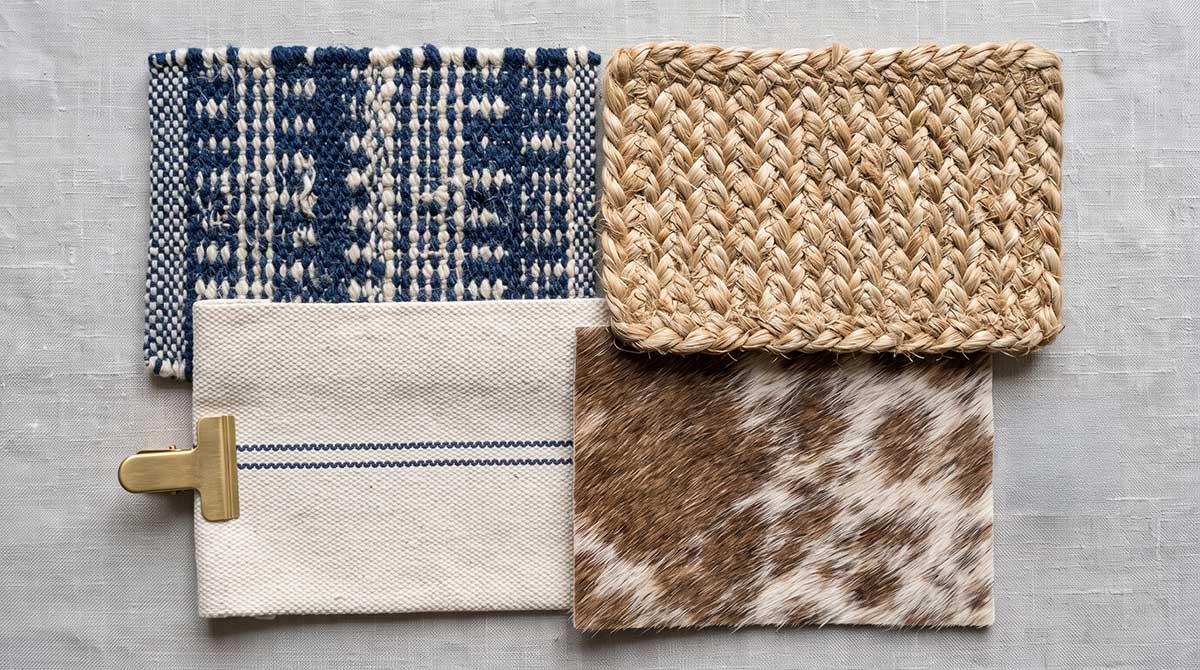
Once the size is settled, material does most of the visual work. Wool holds up to years of dropped forks and rolling chairs, while a solution-dyed nylon or polypropylene weave is a practical pick for a house with kids or a dog underfoot. A few pairings work well in a dining setting:
- A jute or sisal border rug for a casual breakfast nook, paired with a washable cotton runner near the table itself.
- A patterned wool flatweave under a glass or marble table, where the rug adds warmth without competing with the tabletop.
- A cowhide rug works well under a round pedestal table in a smaller space that needs texture without bulk. Since the material requires different care from conventional woven rugs, professional cowhide rug cleaning can help remove dirt and stains without damaging the hide.
Round tables in particular look better on a rug with a bit of extra generosity, since a tight circle draws attention to any leg that drifts off the edge.
Caring for a Dining Room Rug
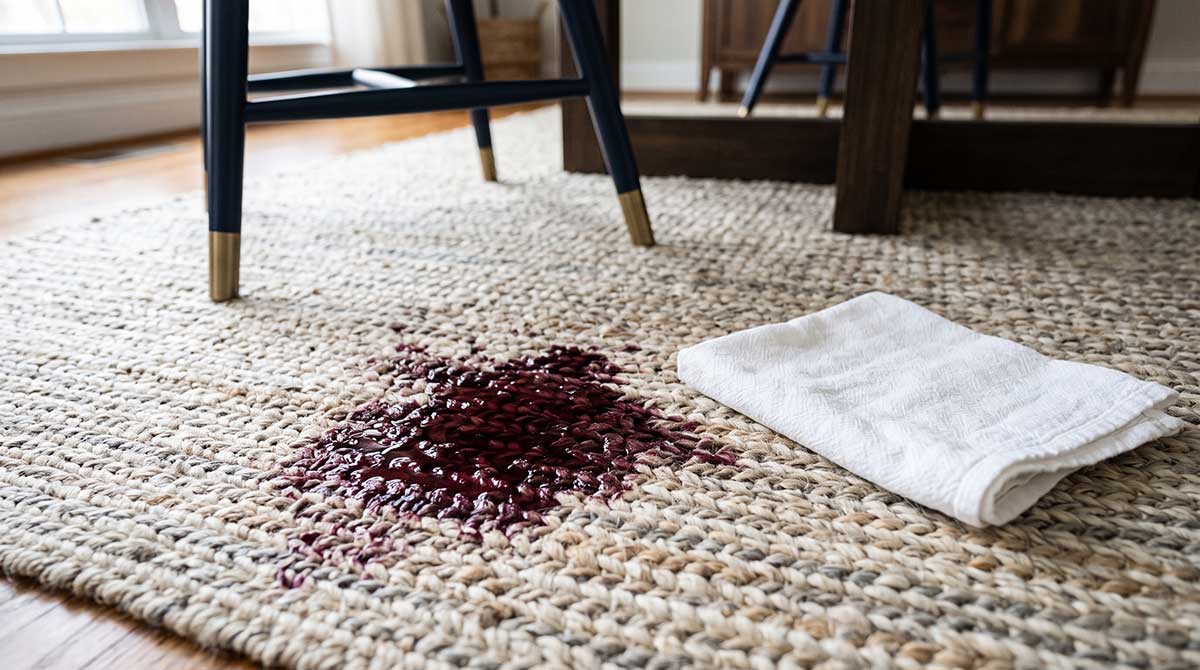
A dining rug takes more abuse than almost any other rug in the house, between dropped food, spilled wine, and chair legs dragging across the pile daily. Delicate weaves need the most caution. A silk rug under a table looks beautiful but stains easily and can be damaged by household spot cleaners, so professional silk rug cleaning may be the safer option for tougher stains. Wool and other natural fibre rugs need similar care, since harsh chemicals strip the lanolin that gives wool its natural stain resistance.
Regular vacuuming keeps grit out of the backing, but it will not remove oil, wine, or sauce once it has set into the pile. That is where professional rug cleaning for dining room rugs earns its keep, particularly for wool, silk, or natural fibre pieces that a harsh store-bought cleaner could ruin.
Final Thoughts

Getting the size right is the difference between a dining room that feels finished and one where the furniture looks like it is floating on a raft. Measure the table, add clearance for the chairs, and size up rather than down whenever the numbers land between two standard dimensions. The rug should settle into the room’s proportions rather than announce itself, which only happens when every chair leg stays on the pile at every point in a meal.
How We Can Help
We clean the dining room rugs that see the heaviest daily use, from wool and silk to cowhide and natural fibre weaves, using methods matched to each material. Stains from wine, sauce, and candle wax come out best when treated early by someone who knows how a fibre reacts to a cleaner.
Book professional cleaning for your dining room rug and get a quote in minutes.
References
- Pottery Barn. “How to Use an Area Rug.” Pottery Barn.
- Houzz. “Prevent Slips and Floor Damage With the Right Rug Pad.” Houzz.